
When people see a massive 6×6 fire truck operating in remote forests, industrial zones, airports, or disaster areas, one common question comes to mind: What fuel does a 6×6 fire truck use? In most cases, a 6×6 fire truck is powered by diesel fuel. Diesel is the preferred fuel for heavy-duty emergency vehicles because it provides high torque, excellent durability, and the long operating range needed for demanding rescue and firefighting missions.
However, the exact fuel system can vary depending on the chassis, engine, operating environment, and vehicle design. Understanding the fuel used by a 6×6 fire truck helps explain why these vehicles are capable of carrying large water tanks, firefighting equipment, rescue tools, and crews across difficult terrain.
Most 6×6 Fire Trucks Use Diesel Fuel
The majority of traditional 6×6 fire trucks use diesel engines. This is mainly because diesel engines are well-suited to heavy commercial vehicles and emergency apparatus.
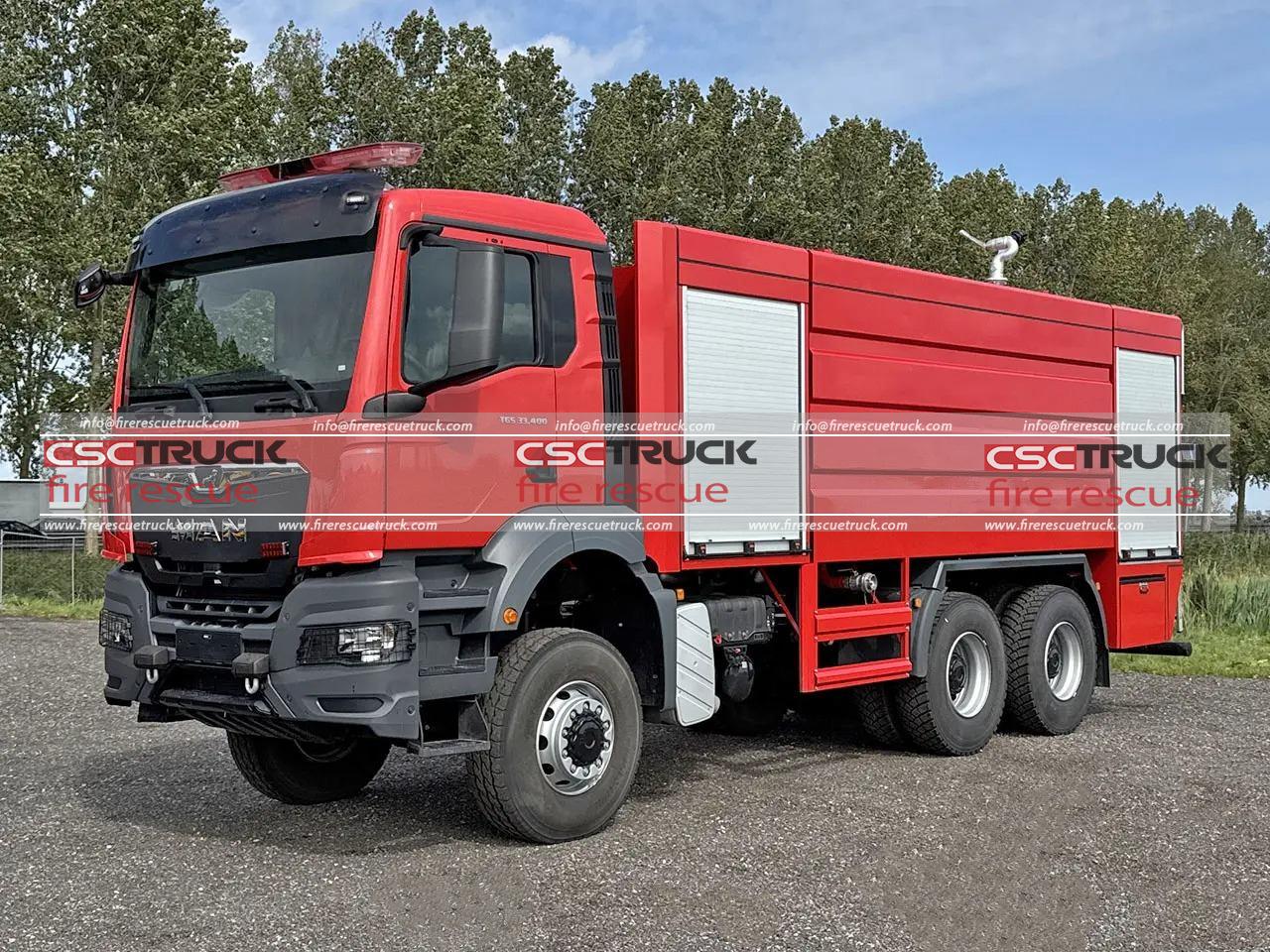
A 6×6 fire truck is significantly heavier than an ordinary passenger vehicle. It may carry thousands of liters of water or foam, powerful fire pumps, rescue equipment, and a full firefighting crew. As a result, the truck needs a powertrain that can generate strong torque at low engine speeds.
Diesel engines are particularly effective in this area. Their high- and low-end torque allows a 6×6 fire truck to move heavy loads from a stationary position and climb steep gradients. This is especially important when the vehicle is operating on uneven ground, such as mud, sand, gravel, or snow.
For example, CSCTRUCK Fire Rescue Truck offers specialized 4×4 and 6×6 fire rescue vehicles designed for difficult environments. Its off-road fire trucks are intended for applications such as forest firefighting, mining, military operations, and disaster response, where traction and heavy-duty performance are critical.
Why Diesel Is Ideal for a Heavy Fire Truck
There are several important reasons why diesel remains the most common fuel choice for 6×6 fire trucks.
1. High Torque for Off-Road Driving
A 6×6 fire truck must often travel over steep slopes and challenging terrain. Diesel engines provide substantial torque, helping the truck maintain forward movement even when fully loaded.
This is particularly valuable for a 6×6 configuration. With three driven axles, the vehicle can distribute engine power across six wheels. When combined with a powerful diesel engine, the truck can achieve excellent traction in difficult conditions.
2. Excellent Fuel Efficiency for Heavy Vehicles
Diesel engines generally provide good fuel efficiency compared with gasoline engines of similar power. This is important because fire trucks may need to travel long distances or remain operational for extended periods.
A 6×6 fire truck may be deployed far from a fire station. During wildfires or large-scale disasters, the vehicle may operate for many hours. A diesel engine helps provide a practical operating range while carrying a large fuel tank.
3. Engine Durability
Emergency vehicles must be dependable. A fire truck may sit at a station for a period of time and then be required to start immediately during an emergency.
Heavy-duty diesel engines are designed for demanding commercial applications and long service life. Their robust construction makes them suitable for the repeated heavy loads and intense operating conditions associated with emergency response vehicles.
Does a 6×6 Fire Truck Use Gasoline?
Some specialized vehicles may use gasoline or alternative power systems, but gasoline is not the standard choice for most heavy 6×6 fire trucks.
Gasoline engines can offer high power and quick acceleration, but heavy fire trucks generally prioritize torque, durability, and long-duration operation. These characteristics have traditionally made diesel a more practical option.
The exact choice depends on the chassis manufacturer and the intended application. For example, an airport rescue fire truck may have different performance priorities from a forest fire truck or a heavy rescue vehicle.
Therefore, it is always important to check the specific engine and chassis specifications of a 6×6 fire truck rather than assuming that every model uses the same fuel.

How Much Fuel Does a 6×6 Fire Truck Need?
The fuel capacity of a 6×6 fire truck depends on the chassis and vehicle design. Heavy-duty trucks typically use a large fuel tank because emergency operations can take place far away from refueling facilities.
Fuel consumption is also influenced by several factors, including:
- Vehicle weight
- Engine power
- Driving speed
- Terrain conditions
- 4-wheel or 6-wheel drive operation
- Water and foam load
- Use of auxiliary systems
A 6×6 fire truck driving on a highway may consume fuel differently from one climbing a muddy slope or operating continuously in a disaster zone. Off-road driving and heavy loads naturally increase fuel consumption.
What About the Fire Pump—Does It Use Separate Fuel?
In most conventional 6×6 fire trucks, the main engine provides the primary power for vehicle movement. The fire pump is generally driven through the truck’s powertrain using a power take-off (PTO) or another integrated mechanical system.
This means the truck does not usually require a separate gasoline or diesel engine solely for the fire pump. When the firefighting system is activated, power from the vehicle’s engine is transferred to the pump system.
The advantage is a more integrated design. The same main power unit supports the vehicle’s mobility and firefighting operations, although the exact system varies by truck model and manufacturer.

Are Electric 6×6 Fire Trucks Available?
Electric and alternative-energy fire trucks are gradually attracting more attention. Battery-electric emergency vehicles can offer reduced local emissions and quieter operation.
However, traditional diesel-powered 6×6 fire trucks remain extremely common, especially in heavy-duty and off-road applications. The reason is simple: these vehicles require high energy density, long operating range, and rapid refueling capability.
Modern fire truck manufacturers are also exploring new powertrain technologies. CSCTRUCK Fire Rescue Truck, for example, has highlighted both conventional high-mobility fire trucks and newer electric firefighting platforms in its product and technology development.
CSCTRUCK Fire Rescue Truck and 6×6 Emergency Vehicles
For organizations searching for a professional heavy-duty firefighting vehicle, CSCTRUCK Fire Rescue Truck provides a broad range of emergency vehicles through FireRescueTruck.com.
Its product range includes fire trucks, rescue vehicles, airport rescue firefighting trucks, and specialized 4×4 and 6×6 emergency platforms. The company’s 6×6 rescue fire truck products are designed around high mobility, modular equipment, and demanding emergency operations. One example is a 6×6 combination rescue fire truck developed for disaster response and rescue missions, with a 10-ton winch, an eight-person crew capacity, and a maximum gradeability of 60%.
When selecting a 6×6 fire truck, buyers should evaluate the engine fuel type, horsepower, torque, fuel tank capacity, emission requirements, and intended operating environment. These specifications directly affect the truck’s range, performance, and long-term operating cost.

Conclusion
So, what fuel does a 6×6 fire truck use? In most cases, the answer is diesel fuel. Diesel engines provide the high torque, durability, and long operating range required by heavy-duty firefighting and rescue vehicles.
While electric and alternative-fuel technologies are developing, diesel remains the standard power source for many conventional 6×6 fire trucks, especially those designed for off-road and extreme-terrain operations. For emergency services, the right fuel system is not simply about fuel economy—it is about ensuring that the truck can reach the scene, carry its equipment, and continue working when conditions are at their most challenging.