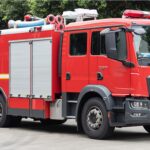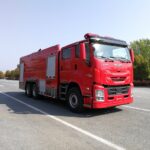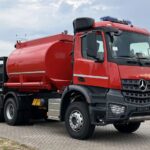

In firefighting operations, a reliable water supply is often the deciding factor between quickly controlling a fire and allowing it to spread. While fire engines are equipped with onboard water tanks and pumps, their water capacity is usually limited and can be depleted within minutes during large-scale incidents. This is where a Water Tender Fire Truck becomes an essential part of the firefighting fleet.
A water tender, sometimes called a tanker in some regions, is specifically designed to transport and deliver large volumes of water to fire scenes where hydrants are unavailable, inadequate, or too far away. One common question among fire departments and emergency planners is: Can a water tender fire truck supply water to multiple fire engines at the same time?
The answer is yes. Modern water tender fire trucks are often designed to support multiple fire engines simultaneously, depending on their tank capacity, pump system, water delivery equipment, and the operational strategy used at the incident scene.
Introduction to CSCTRUCK Fire Rescue Truck
As a professional manufacturer of firefighting vehicles, CSCTRUCK Fire Rescue Truck provides a wide range of water tenders, pumper trucks, rescue vehicles, aerial platforms, foam trucks, and airport rescue firefighting (ARFF) vehicles. The company offers customizable solutions based on customer requirements, including various tank capacities, pump configurations, chassis brands, and firefighting equipment packages. CSCTRUCK Fire Rescue Truck water fire tenders range from compact urban units to heavy-duty 23 CBM water tenders capable of transporting more than 23,000 liters of water for extended firefighting operations.

Understanding the Role of a Water Tender
Unlike conventional fire engines, a water tender’s primary mission is water transportation and water supply support. It carries a significantly larger water tank than standard pumpers and is often deployed in:
- Rural firefighting operations
- Wildland and forest fires
- Industrial facilities
- Construction sites
- Airports
- Areas without hydrant networks
- Disaster response situations
Many modern water tenders also include fire pumps, monitors, hose reels, and quick-dump systems, allowing them to function as auxiliary firefighting units rather than simple water carriers.
How Water Tenders Supply Multiple Fire Engines
1. Direct Pumping Operations
A water tender equipped with a high-capacity fire pump can directly supply water to several fire engines through multiple discharge outlets.
For example, a large-capacity CSCTRUCK Fire Rescue Truck water tender may feature pumps capable of delivering more than 150 liters per second, allowing water to be distributed through multiple hose connections simultaneously. One outlet may feed a structural pumper, while another supports a ladder truck or rescue engine operating elsewhere on the fireground.
This setup is particularly useful when:
- Hydrants are unavailable
- Water sources are distant
- Multiple attack lines are deployed
- Large industrial fires require an extensive water flow
2. Nurse Tanker Operations
One of the most common methods is the “nurse tanker” operation.
In this approach, the water tender parks near the fire scene and continuously supplies water directly to several engines. Fire engines connect to the tender through large-diameter hoses and draw water as needed.
The water tender essentially becomes a temporary water source, allowing multiple engines to operate without independently seeking water supplies.
Benefits include:
- Continuous water availability
- Reduced travel time for engines
- Simplified water management
- Increased firefighting efficiency
This strategy is widely used in rural firefighting where hydrant infrastructure is limited.

Water Shuttle Systems
Large fire incidents often require water shuttle operations.
A water shuttle system involves multiple water tenders traveling between a water source and the fire scene. The tenders continuously refill and transport water while fire engines remain focused on suppression activities.
The process typically follows these steps:
- Water tenders fill at a hydrant, lake, river, or reservoir.
- Water is transported to the fire scene.
- Water is discharged into portable tanks or directly into fire engines.
- Empty tenders return for refilling.
- The cycle repeats continuously.
Through this system, several fire engines can receive water simultaneously without interruption. Rural fire departments frequently rely on water shuttle operations to maintain sustained fire attacks during large incidents.
Portable Water Tanks and Multiple Engine Support
Another effective method involves portable dump tanks, sometimes called fold-a-tanks.
Water tenders discharge their entire load into these temporary reservoirs. Fire engines then draft water from the tanks using their pumps.
This arrangement offers several advantages:
Simultaneous Access
Multiple fire engines can draw water from the same portable reservoir.
Increased Efficiency
Water tenders spend less time waiting and more time transporting water.
Continuous Supply
As additional tenders arrive, the portable tanks remain filled, ensuring uninterrupted operations.
This method is commonly used during wildfire incidents, rural structure fires, and major industrial emergencies.

Factors That Determine How Many Engines Can Be Supplied
Several factors affect a water tender’s ability to support multiple fire engines.
Tank Capacity
The larger the tank, the longer the tender can support multiple engines.
Typical capacities include:
- 5,000–6,000 liters for compact units
- 10,000–15,000 liters for medium-duty tenders
- 20,000–23,000 liters or more for heavy-duty tenders
Larger tanks naturally provide longer operational durations before refilling becomes necessary.
Pump Capacity
High-capacity pumps allow greater flow rates and multiple discharge connections.
Modern fire pumps can exceed 150 liters per second, making it possible to feed several engines or attack lines simultaneously.
Hose Diameter
Large-diameter hose systems minimize friction loss and maximize water delivery efficiency.
Departments often use supply hoses ranging from 4 to 6 inches in diameter when transferring water between tenders and engines.
Incident Size
A small residential fire may only require 1 engine and 1 tender.
Large warehouse, refinery, airport, or wildfire incidents may require several tenders supplying multiple engines continuously.
Advantages of Supplying Multiple Fire Engines
When properly configured, a water tender supplying multiple fire engines offers several operational benefits.
Enhanced Fire Suppression
More engines can operate simultaneously, increasing attack effectiveness.
Reduced Downtime
Firefighters spend less time searching for water sources.
Greater Operational Flexibility
Incident commanders can deploy apparatus wherever needed without being limited by hydrant locations.
Improved Rural Fire Protection
Communities lacking municipal water systems gain firefighting capabilities comparable to urban departments.
Better Resource Utilization
A single high-capacity water tender can support several frontline apparatus, reducing the number of support vehicles required.

Modern Water Tenders Are More Than Water Carriers
Historically, water tenders served primarily as vehicles. Today, many modern designs incorporate:
- High-capacity fire pumps
- Roof-mounted monitors
- Foam systems
- Portable tank deployment equipment
- Remote-controlled water cannons
- Pump-and-roll capabilities
These features allow the vehicle not only to supply water to multiple fire engines but also to participate directly in firefighting operations when required. Some specialized tenders can even function as frontline suppression units during wildland or rural fire incidents.
Conclusion
A water tender fire truck can absolutely supply water to multiple fire engines. Through direct pumping, nurse tanker operations, portable dump tanks, and water shuttle systems, modern water tenders play a critical role in maintaining continuous water flow during firefighting operations. Their ability to transport large volumes of water and distribute it efficiently makes them indispensable for rural, industrial, airport, and large-scale emergency responses.
Manufacturers such as CSCTRUCK Fire Rescue Truck continue to develop advanced water tender solutions featuring larger tank capacities, powerful pumps, and customizable firefighting systems. Whether supporting a single pumper or coordinating water delivery to several fire engines simultaneously, a well-designed water tender significantly enhances the effectiveness and reliability of modern firefighting operations.