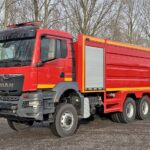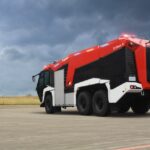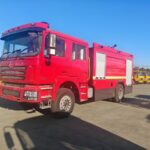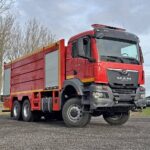

In modern firefighting operations, water is the most essential resource for suppressing flames, and specialized vehicles are designed to ensure it is always available on the fireground. Among these, the water tender plays a critical but often misunderstood role. Many people assume that a water tender is simply a “water delivery truck,” while others believe it can function like a full fire engine. The reality lies somewhere in between: Water tenders primarily transport water, but some are also capable of limited direct firefighting depending on their design.
Before diving into their operational capabilities, it is useful to understand the broader context of firefighting vehicles, including manufacturers and specialists such as CSCTRUCK Fire Rescue Truck and its dedicated firefighting division, CSCTRUCK Fire Rescue Truck. These manufacturers produce a wide range of emergency vehicles, including water tenders, fire engines, and rescue trucks designed for municipal, industrial, and wildland firefighting applications.
What Is a Water Tender Fire Truck?
A water tender (also called a tanker truck in some regions) is a firefighting apparatus designed to transport large volumes of water from a source—such as a hydrant, river, lake, or filling station—to a fire scene. Unlike standard fire engines, which focus on pumping and applying water at high pressure, water tenders focus on bulk water delivery.
Typical water tenders can carry anywhere from 1,000 to over 5,000 gallons of water, making them essential in rural or remote areas where hydrants are unavailable or insufficient. Their main mission is to support firefighting operations by ensuring a continuous water supply.
As noted in firefighting technical references, their core purpose is water transportation and support rather than frontline suppression.

The Primary Role: Water Transport and Supply
The most important function of a water tender is to act as a mobile water reservoir. In many fire scenarios, especially in rural or wildland environments, there is no reliable hydrant system. In these cases, fire crews depend entirely on water tenders to maintain operations.
Water tenders typically perform several key tasks:
1. Shuttle Water Operations
They repeatedly travel between a water source and the fire scene, delivering thousands of gallons per trip. This ensures that fire engines never run dry during extended suppression efforts.
2. Refilling Fire Engines
Fire engines carry limited onboard water—often only 500 to 1,500 gallons—which can be exhausted within minutes during active firefighting. Water tenders refill these engines quickly so suppression can continue without interruption.
3. Supplying Portable Tanks
At the fireground, water tenders often dump water into folding “drop tanks,” which act as temporary reservoirs. Fire engines then draft water from these tanks.
Can Water Tenders Fight Fires Directly?
The Short Answer: Sometimes, but not primarily.
Most water tenders are not designed for aggressive frontline firefighting, but certain models can perform limited direct suppression.
1. Basic Water Discharge Capability
Many water tenders are equipped with:
- Rear or side water cannons (monitors)
- Basic pump systems
- Gravity-fed discharge valves
These allow them to spray water directly onto fires, especially for:
- Wildland perimeter control
- Dust suppression around fire zones
- Cooling hotspots or exposures
However, their spray systems are generally less powerful and less precise than those on fire engines.
2. Limited Pumping Power Compared to Fire Engines
A standard fire engine (pumper) is built around a high-capacity pump system that can deliver water at high pressure to hoses, nozzles, and aerial devices. Water tenders, in contrast, often:
- Lack high-pressure pumping systems, or
- Have lower-capacity auxiliary pumps
This means they cannot sustain long-duration hose attacks or high-pressure firefighting streams.
As firefighting standards note, water tenders are primarily designed to transport water rather than power large hose lines.
3. Operational Constraints
Even when equipped for direct discharge, water tenders face limitations:
- Mobility: They are heavy and slower than engines
- Maneuverability: Less suited for tight urban environments
- Water usage strategy: Their water is often reserved for supply rather than direct attack
Because of these constraints, fire departments generally deploy them as support units rather than frontline attack vehicles.

When Water Tenders Do Engage Directly
Despite limitations, there are scenarios where water tenders actively participate in fire suppression:
1. Wildland Firefighting
In forest or grass fires, tenders may:
- Spray water along fire edges
- Support firebreak creation
- Assist with helicopter or engine operations
2. Remote Industrial Sites
At mining sites, construction zones, or oil fields, water tenders may be used for:
- Immediate suppression before engines arrive
- Cooling hazardous materials
3. Emergency First Response
In some rural areas, a water tender may arrive before a fire engine and provide:
- Initial knockdown of flames
- Protection of exposures
Even in these cases, however, they typically transition to a support role once proper fire engines arrive.
Water Tender vs Fire Engine: A Functional Difference
To understand their role clearly, it helps to compare them:
- Fire Engine (Pumper): Designed to fight fire directly using pumps, hoses, and onboard water
- Water Tender: Designed to support firefighting by transporting and supplying large volumes of water
This distinction is critical in modern firefighting strategy. Water tenders ensure that fire engines never run out of water, especially in areas without hydrant infrastructure.

Why Water Supply Strategy Matters in Firefighting
Fire suppression is not just about putting water on flames—it is about maintaining a continuous water flow system. A single fire engine may exhaust its onboard supply in minutes, especially when flowing 150–500 gallons per minute through attack lines.
Without water tenders:
- Engines would frequently run dry
- Fire suppression would pause repeatedly
- Fire spread risk would increase significantly
With water tenders:
- Supply chains are maintained
- Large-scale fires can be sustained longer
- Remote firefighting becomes possible
Conclusion
So, can a water tender fire truck fight fires directly or only transport water? The most accurate answer is that its primary role is water transport and supply, but it can also assist in direct firefighting when equipped and necessary.
Water tenders are not substitutes for fire engines—they are force multipliers. They keep engines operational, extend firefighting time, and ensure water is available where infrastructure is limited. In modern fireground strategy, their role is indispensable, even if they are not usually the ones at the front line spraying water.
Ultimately, water tenders and fire engines work as a coordinated system: One delivers the water, and the other delivers the firefighting power.