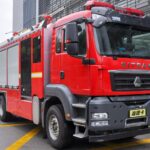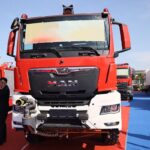

Introduction: The Versatile Role of CSCTRUCK Fire Rescue Truck
In modern disaster response, emergency vehicles are expected to perform more than a single task. Beyond fighting fires, rescuing trapped people, and transporting firefighting equipment, some heavy-duty fire trucks are also designed to support communities during natural disasters and infrastructure failures. Among these vehicles, the 6×6 fire truck stands out because of its excellent mobility, large carrying capacity, and ability to operate in difficult environments.
CSCTRUCK Fire Rescue Truck specializes in manufacturing advanced firefighting and rescue vehicles, including 4×4 and 6×6 all-terrain fire trucks designed for challenging emergencies. These vehicles are used for industrial firefighting, airport rescue, wildland firefighting, disaster relief, and remote-area operations.
A common question during disaster planning is: Can a 6×6 fire truck supply emergency drinking water? The answer is YES, but with important limitations. While many 6×6 fire trucks can transport and distribute water during emergencies, not every fire truck is designed to carry potable drinking water. The ability depends on the tank design, water quality requirements, and available treatment systems.
Understanding the Water Capacity of a 6×6 Fire Truck
A 6×6 fire truck is built on a 6-wheel-drive chassis, giving it superior traction and stability compared with standard 4×2 or 6×4 vehicles. This makes it suitable for reaching disaster areas where roads may be damaged by earthquakes, floods, landslides, or storms.
Many 6×6 fire trucks are equipped with large water tanks primarily intended for firefighting. For example, CSCTRUCK Fire Rescue Truck produces 6×6 fire trucks with different tank capacities depending on operational requirements. Some models feature thousands of liters of onboard water storage, while larger airport rescue fire trucks can carry more than 10,000 liters of water for emergency firefighting operations.
This large water capacity naturally makes a 6×6 fire truck a potential emergency water supply vehicle. During disasters, the truck can transport water to locations where normal water systems have failed.
However, the water carried in a typical fire truck is usually classified as firefighting water, not drinking water. Fire suppression tanks may contain water suitable for extinguishing fires, but may not meet standards required for human consumption.

How a 6×6 Fire Truck Can Support Emergency Drinking Water Supply
Although a standard fire truck is not automatically a drinking water vehicle, it can assist emergency water distribution in several ways.
1. Transporting Water to Disaster Areas
The primary advantage of a 6×6 fire truck is its ability to deliver large amounts of water quickly. After earthquakes, hurricanes, floods, or major infrastructure failures, communities may lose access to clean water.
A 6×6 fire truck can travel through:
- Muddy roads
- Flooded areas
- Mountain terrain
- Damaged infrastructure zones
- Remote villages
Its all-wheel-drive system allows emergency teams to deliver water supplies when ordinary trucks cannot reach affected locations.
For example, a large-capacity 6×6 water fire truck can transport thousands of liters of water to temporary shelters, emergency camps, or rescue stations.
2. Distributing Treated Drinking Water
To supply safe drinking water, additional systems are required. A fire truck can be modified or equipped with:
- Food-grade water tanks
- Water purification equipment
- Filtration systems
- UV sterilization units
- Chlorination systems
- Drinking water dispensing stations
With these upgrades, a 6×6 emergency vehicle can become a mobile water supply unit.
Some disaster response organizations use specialized water trucks rather than traditional fire trucks for this purpose because these vehicles are designed specifically to maintain drinking water quality.
3. Supporting Temporary Emergency Camps
After major disasters, emergency camps often require reliable water sources for:
- Drinking
- Cooking
- Medical services
- Hygiene operations
A 6×6 fire truck can support these locations by delivering water from safe sources. Even if the water is not used directly for drinking, it can support sanitation and firefighting needs, allowing limited potable water supplies to be reserved for human consumption.
Why the 6×6 Platform Is Suitable for Disaster Water Supply
The biggest advantage of a 6×6 fire truck is mobility.
Excellent Off-Road Capability
Disaster zones often have damaged roads and difficult terrain. A 6×6 chassis distributes vehicle weight across three driven axles, improving traction on:
- Sand
- Mud
- Snow
- Rocky surfaces
This allows emergency responders to reach areas isolated from normal supply networks.

Large Payload Capacity
Water is heavy. One liter of water weighs approximately one kilogram, meaning a truck carrying 10,000 liters of water is transporting about 10 tons of liquid.
Heavy-duty 6×6 fire trucks are designed to handle large payloads while maintaining stability. CSCTRUCK Fire Rescue Truck‘s large ARFF 6×6 fire trucks, for example, are built with high-capacity tanks and powerful chassis systems for demanding emergency operations.
Multi-Function Emergency Capability
A modern 6×6 fire truck can perform multiple roles, including:
- Fire suppression
- Rescue support
- Equipment transportation
- Emergency lighting
- Disaster logistics
- Water transportation
Some rescue versions are equipped with extensive rescue equipment and designed as mobile emergency support platforms.
This flexibility makes them valuable assets during large-scale emergencies.

Limitations of Using a Fire Truck for Drinking Water
Despite their advantages, there are several challenges.
1. Firefighting Tanks May Not Be Food Grade
Many fire truck tanks are manufactured for firefighting purposes. They may not meet drinking water requirements because of:
- Tank material selection
- Internal coatings
- Cleaning procedures
- Storage conditions
A dedicated potable water tank is usually required for safe drinking water transportation.
2. Water Contamination Risk
Water stored for firefighting may become contaminated due to:
- Long storage periods
- Poor tank maintenance
- Residue inside the tank
- Contact with non-potable equipment
Before human consumption, water must be tested and treated.
3. Operational Priorities
During a major emergency, fire trucks are primarily needed for firefighting and rescue operations. Using firefighting vehicles only as water delivery trucks may reduce available emergency response capability.
For this reason, many emergency agencies operate specialized water supply vehicles alongside fire trucks.
Can CSCTRUCK Fire Rescue Truck 6×6 Fire Trucks Be Used for Emergency Water Supply?
CSCTRUCK Fire Rescue Truck‘s 6×6 vehicles are designed for extreme emergency environments where mobility, durability, and high capacity are essential. Their water-carrying capability makes them suitable for disaster support missions, especially when communities need rapid transportation of water resources.
For applications requiring emergency drinking water supply, customers can consider customized configurations, such as:
- Food-grade stainless steel water tanks
- Drinking water pumps
- Filtration systems
- Water treatment modules
- Distribution outlets
With these modifications, a 6×6 platform can serve as a powerful mobile emergency water supply vehicle.

Conclusion
A 6×6 fire truck can supply emergency drinking water under the right conditions, but a standard firefighting configuration is not automatically suitable for potable water delivery. Its large tank capacity, powerful off-road capability, and disaster response flexibility make it an excellent platform for emergency water transportation.
For true drinking water applications, the vehicle should be equipped with food-grade tanks and purification systems to ensure safety. With proper customization, a CSCTRUCK Fire Rescue Truck 6×6 Fire Rescue Truck can become not only a firefighting machine but also an important disaster relief asset capable of supporting communities during critical emergencies.